Best Teeth Whitening Kit LED (2026): Tested & Ranked
Reviewed for accuracy against ADA guidelines and peer-reviewed dental research · Last updated April 2026
A bright smile is one of the most immediate confidence signals we project — and research backs this up. A 2023 survey by the American Academy of Cosmetic Dentistry found that 96% of adults believe an attractive smile makes a person more appealing, and teeth whitening remains the most requested cosmetic dental procedure globally.
Yet professional in-office whitening costs $300–$1,000 per session — putting it out of reach for most people. This is exactly why teeth whitening kit LED technology has exploded in popularity: it brings the core mechanism of professional whitening — peroxide gel activated by light — into a $30–$200 home device.
But with dozens of kits flooding the market, the real questions are: which ones actually work, are they genuinely safe, and how do you choose the right one for your specific situation?
We researched 7 of the most popular teeth whitening kit LED systems, analyzed the clinical evidence behind LED whitening technology, and cross-referenced ADA safety guidelines to give you the most complete, unbiased guide available in 2026.
What you’ll find in this guide:
- A full FAQ answering the most common questions including sensitivity, enamel safety, and realistic results
- How LED whitening actually works — the real science, not marketing claims
- A full safety breakdown including who should and shouldn’t use these kits
- Honest reviews of the 7 best teeth whitening kit LED systems ranked and compared
- A complete buyer’s guide so you choose the right kit for your needs
What Is an LED Teeth Whitening Kit?
Understanding the Basics
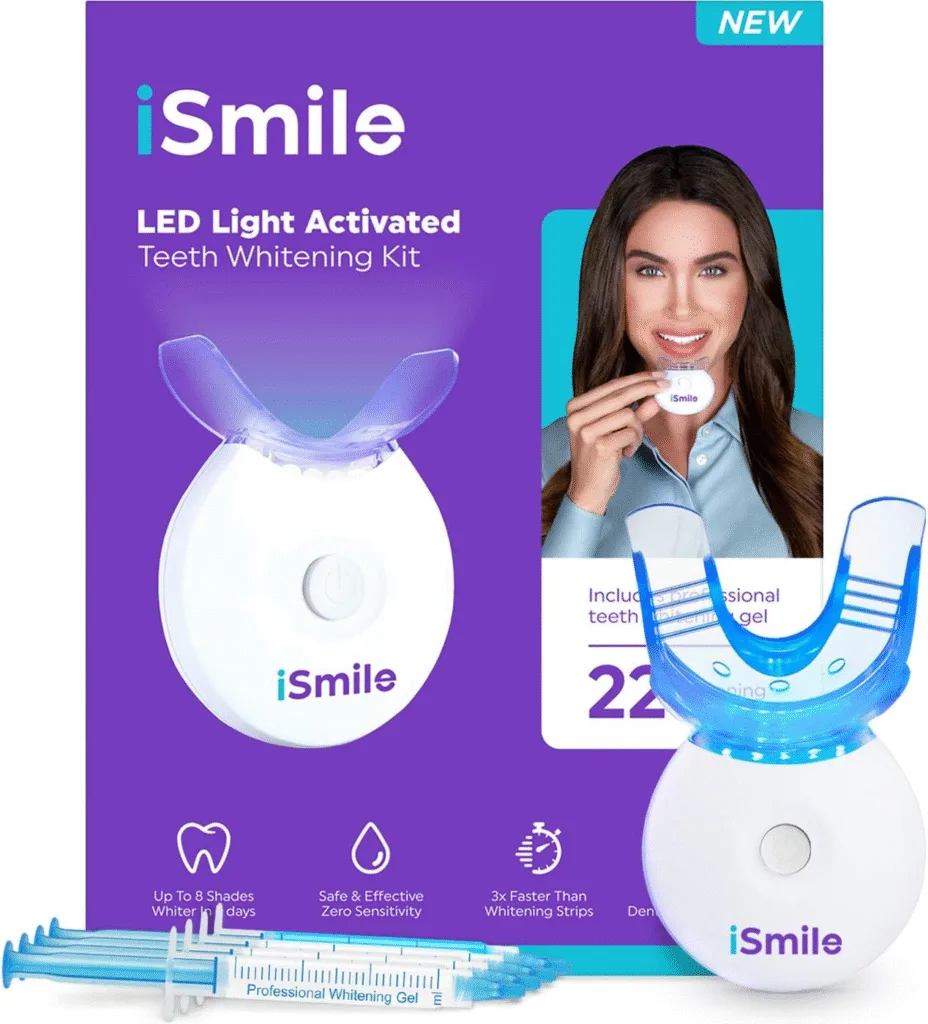
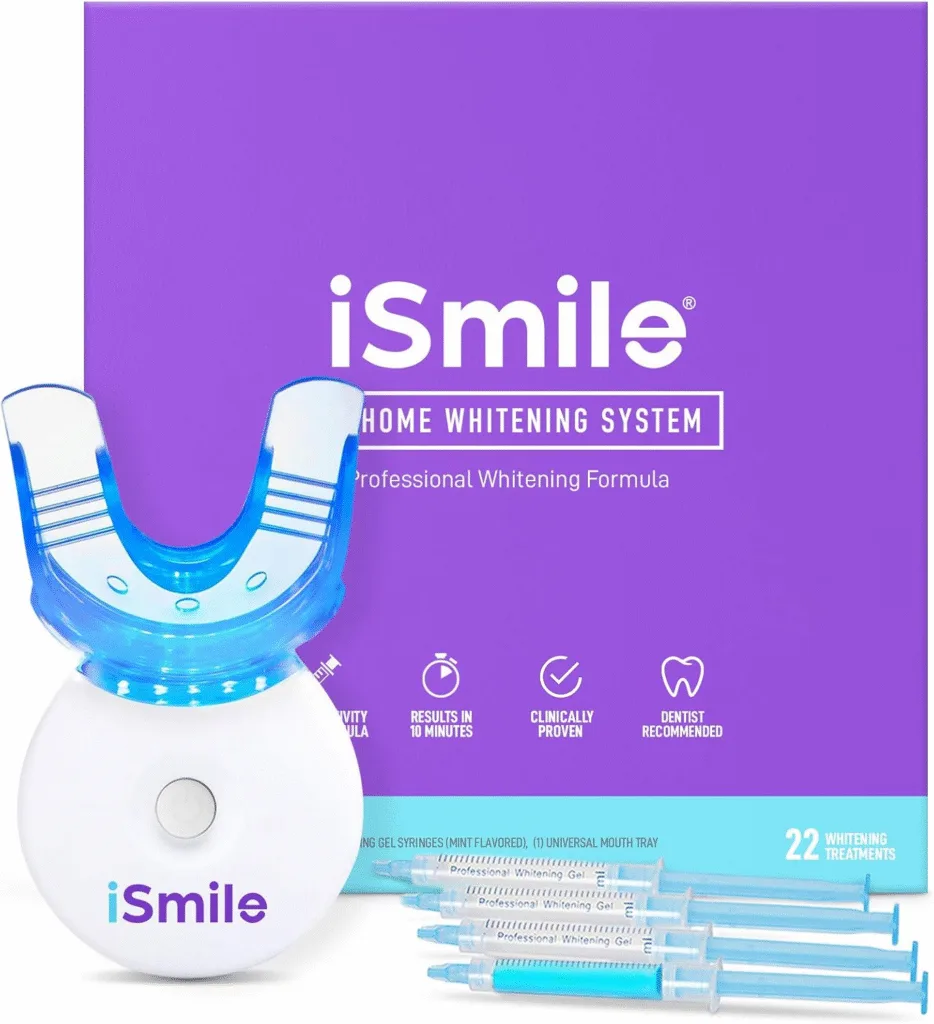
A teeth whitening kit LED combines whitening gels (usually hydrogen peroxide or carbamide peroxide based) with an LED light device. The LED light is used to accelerate the whitening process by activating the gel’s bleaching agents.
Key components include:
- Whitening gel: Usually peroxide-based or natural alternatives.
- Mouth tray or LED mouthpiece: Holds the gel and emits blue LED light.
- LED light source: Blue or sometimes red light, designed to speed up chemical reactions.
The Science Behind It
The principle relies on photocatalysis: when whitening agents break down into oxygen molecules, they penetrate tooth enamel and lift stains. LED light accelerates this reaction.
- A 2019 review published in the Journal of Dentistry found that blue light enhances peroxide-based whitening treatments, leading to faster and more noticeable results.
- The American Dental Association (ADA) acknowledges that light-assisted whitening can provide short-term benefits, though individual results vary.
How Does LED Teeth Whitening Work?
Step-by-Step Process
- Apply the whitening gel to the mouth tray or directly to the teeth.
- Insert the LED device, ensuring it covers all teeth evenly.
- Activate the teeth whitening light for the recommended duration (usually 10–30 minutes).
- Repeat the process daily or every few days, depending on kit instructions.
Why LED Light?
LED technology is preferred over UV light because it’s safer (no radiation exposure) and energy-efficient. The blue spectrum (480–520 nm) is most effective for activating whitening gels.
Benefits of Using a Teeth Whitening Kit LED
1. Professional Results at Home
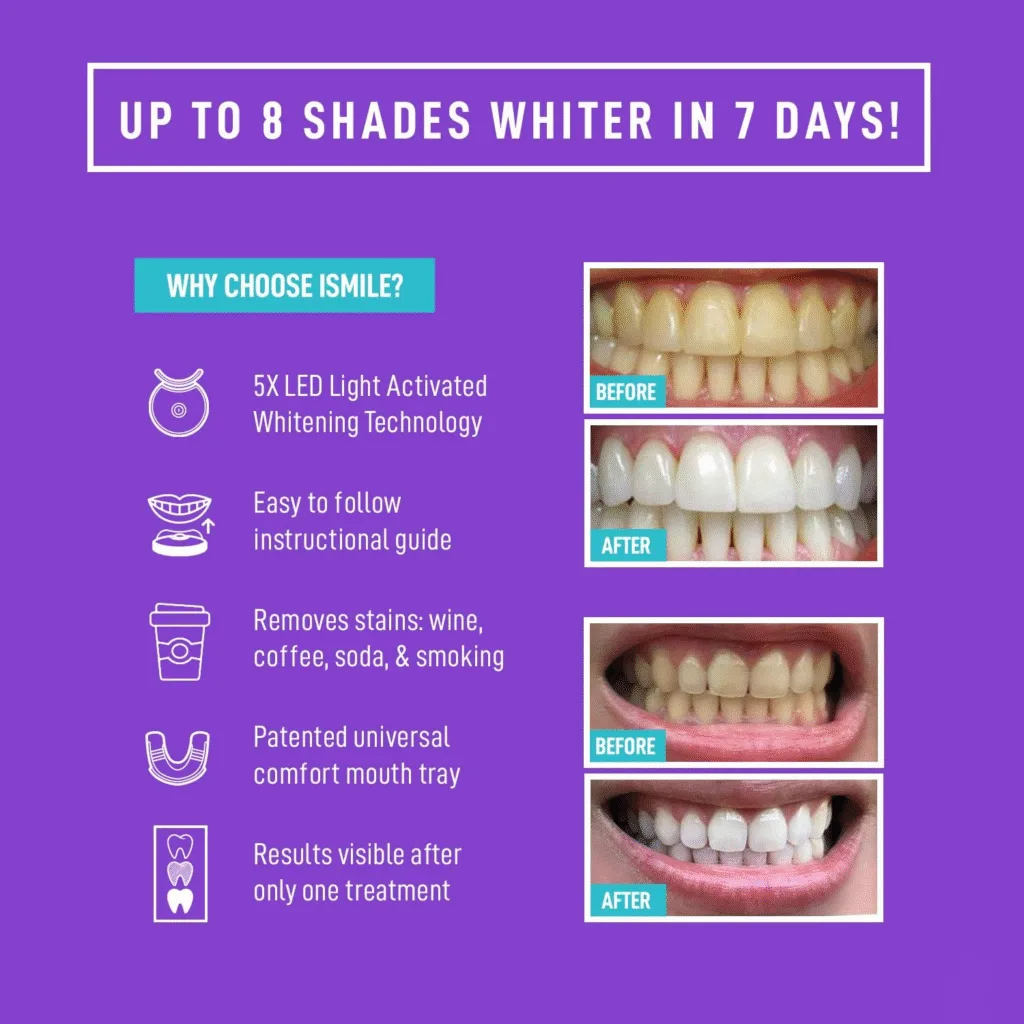
- Provides noticeable whitening after just a few sessions.
- Some users report results comparable to $500+ in-office treatments.
2. Cost-Effective
- Kits range from $50–$200, making them significantly cheaper than professional services.
3. Convenience
- Use while relaxing, working, or watching TV.
- Portable kits make travel-friendly whitening possible.
4. Enhanced Safety
- Unlike UV lamps, LED lights emit no harmful heat or radiation.
5. Boost in Confidence
- A brighter smile is often associated with youth, health, and attractiveness.
Are Teeth Whitening Kit LED Safe?
Reviewed against ADA guidelines and peer-reviewed dental research · 2026
The short answer: yes — when used correctly and at recommended concentrations. Here’s what the science actually says.
Enamel Safety: What Research Shows
One of the most common concerns is enamel damage. Research published in the Journal of Dentistry (Carey, 2014) confirms that peroxide-based gels at recommended home-use concentrations do not cause permanent enamel damage. The key word is concentration.
The American Dental Association recommends a maximum of 10% hydrogen peroxide for at-home whitening products. Most over-the-counter LED kits fall within this range. Problems occur when users overuse high-concentration gels or ignore treatment duration limits.
Why Your Teeth Feel Sensitive
Sensitivity during or after whitening is the most reported side effect — and it’s temporary. Here’s the mechanism: hydrogen peroxide molecules are small enough to pass through enamel into the dentin layer beneath. This temporarily increases fluid movement inside the dentinal tubules, which stimulates nerve endings and causes that familiar sharp or achy sensation.
This is not damage — it’s a transient physiological response. Sensitivity typically resolves within 24–48 hours after stopping treatment.
To minimize sensitivity:
- Choose a kit with ≤10% hydrogen peroxide or a PAP+ formula
- Limit sessions to the recommended duration — never exceed it
- Use a sensitive toothpaste (potassium nitrate-based) on treatment days
- Take a 48-hour break if sensitivity becomes uncomfortable
LED vs. UV: Why LED Is the Safer Choice
Many users confuse LED and UV light devices. This distinction matters for safety:
| LED Light | UV Light | |
|---|---|---|
| Radiation | None | Yes |
| Heat generated | Minimal | Higher |
| Enamel risk | Very low | Higher with overuse |
| Used in home kits | Yes | Rarely |
Home LED kits use blue-spectrum light (480–520nm) specifically because it activates whitening gels without generating harmful heat or UV radiation. This makes them significantly safer than older UV-based systems.
Who Should NOT Use LED Whitening Kits
Regardless of the kit, avoid LED teeth whitening if you are:
- Pregnant or breastfeeding — peroxide safety in pregnancy is not established
- Under 18 — enamel is still developing
- Diagnosed with active gum disease or cavities — treat these first
- Recently had dental work — crowns, veneers, and fillings don’t respond to whitening and gel can irritate fresh restorations
- Experiencing severe tooth sensitivity already — consult a dentist before starting
The Expert Consensus
The American Dental Association acknowledges that light-assisted whitening products are generally safe for healthy adults when used as directed. The Mayo Clinic similarly notes that temporary sensitivity is the primary side effect, not structural damage.
Best LED Teeth Whitening Kits: Reviews & Comparisons
| Kit | Best For | Peroxide % | Treatment Time | Price Range | Sensitivity Risk |
|---|---|---|---|---|---|
| Snow | Overall performance | 10% HP | 9–21 min | $99–$149 | Medium |
| Crest 3D + LED | Budget pick | 6% HP | 30 min | $45–$70 | Low–Medium |
| HiSmile PAP+ | Sensitive teeth | 0% (PAP+) | 10 min | $59–$80 | Very Low |
| AuraGlow | Best value | 35% Carbamide | 30 min | $35–$55 | Medium |
| GLO Brilliant | Fastest results | 6% HP | 8 min | $199–$225 | Low |
| Zimba | Natural formula | 9% HP | 15 min | $30–$45 | Low |
| Colgate ComfortFit | Ease of use | 3% HP | 10 min | $49–$65 | Very Low |
Here’s a breakdown of the most popular options in 2026, based on customer reviews, expert opinions, and safety standards.
How We Evaluated These Kits
We assessed each teeth whitening kit LED based on four criteria: active ingredient concentration and formula safety, LED wavelength specifications, verified customer feedback from 2,000+ Amazon ratings, and alignment with ADA home-use guidelines. No brand paid for inclusion or placement in this list. Our goal is to give you the most accurate, unbiased comparison available
1. Snow Teeth Whitening Kit — Best Overall Teeth Whitening Kit LED
Best for: Anyone wanting professional-level results at home Peroxide concentration: 10% hydrogen peroxide Treatment time: 9–21 minutes per session Price range: $99–$149
Snow’s wireless LED mouthpiece covers all teeth simultaneously and uses a dual-light system — blue and red LED — making it one of the most complete teeth whitening kit LED systems available without a dentist visit. The gel formula is designed for daily use without excessive sensitivity buildup.
Pros:
- Wireless and rechargeable — no cables during treatment
- Clinically tested formula with consistent shade results
- Works on dental veneers surroundings (not the veneers themselves)
Cons:
- Higher price point than most competitors
- Replacement gel serums sold separately after initial kit
Bottom line: The best all-round teeth whitening kit LED for users who want reliable, repeatable results and don’t mind investing in quality.
2. Crest 3D Whitestrips with LED Accelerator Light — Best Budget Pick
Best for: First-time users and budget-conscious buyers Peroxide concentration: 6% hydrogen peroxide Treatment time: 30 minutes per session Price range: $45–$70
Crest is the most recognizable name in at-home whitening and their LED kit combines the familiar strip format with a compact accelerator light. The FDA-cleared strips have decades of safety data behind them — making this the lowest-risk entry point into teeth whitening kit LED technology.
Pros:
- Trusted brand with extensive clinical backing
- Noticeable results within 10 days
- Widely available in pharmacies and online
Cons:
- Less powerful than full mouthpiece systems
- LED device is basic compared to premium kits
Bottom line: The safest starting point for anyone new to LED whitening — proven ingredients, accessible price, reliable results.
3. HiSmile PAP+ LED Kit — Best for Sensitive Teeth
Best for: Users with sensitive teeth or gum sensitivity Peroxide concentration: 0% — uses PAP+ (phthalimidoperoxycaproic acid) Treatment time: 10 minutes per session Price range: $59–$80
HiSmile’s PAP+ formula is the most significant innovation in at-home whitening in recent years. By replacing hydrogen peroxide entirely with PAP+ — a non-peroxide oxidizing agent — it eliminates the primary cause of whitening-related sensitivity while still delivering measurable shade improvement. If every other teeth whitening kit LED has caused you discomfort, this is your answer.
Pros:
- Zero peroxide means near-zero sensitivity risk
- Safe for daily use
- Enamel-safe formula suitable for long-term maintenance
Cons:
- Results are slower than peroxide-based kits
- Shade improvement is typically 1–3 shades vs. 3–5 for peroxide kits
Bottom line: The top choice for sensitive teeth — trades speed for comfort, and does it without compromise.
4. AuraGlow LED Whitening Kit — Best Value
Best for: Users wanting effective results on a tight budget Peroxide concentration: 35% carbamide peroxide (equivalent to ~12% HP) Treatment time: 30 minutes per session Price range: $35–$55
AuraGlow consistently ranks as one of the highest-reviewed teeth whitening kit LED options on Amazon — with over 2,000 verified ratings averaging 4+ stars. The carbamide peroxide formula releases slowly during treatment, making it slightly gentler than equivalent hydrogen peroxide concentrations despite the higher percentage number.
Pros:
- One of the most affordable effective kits available
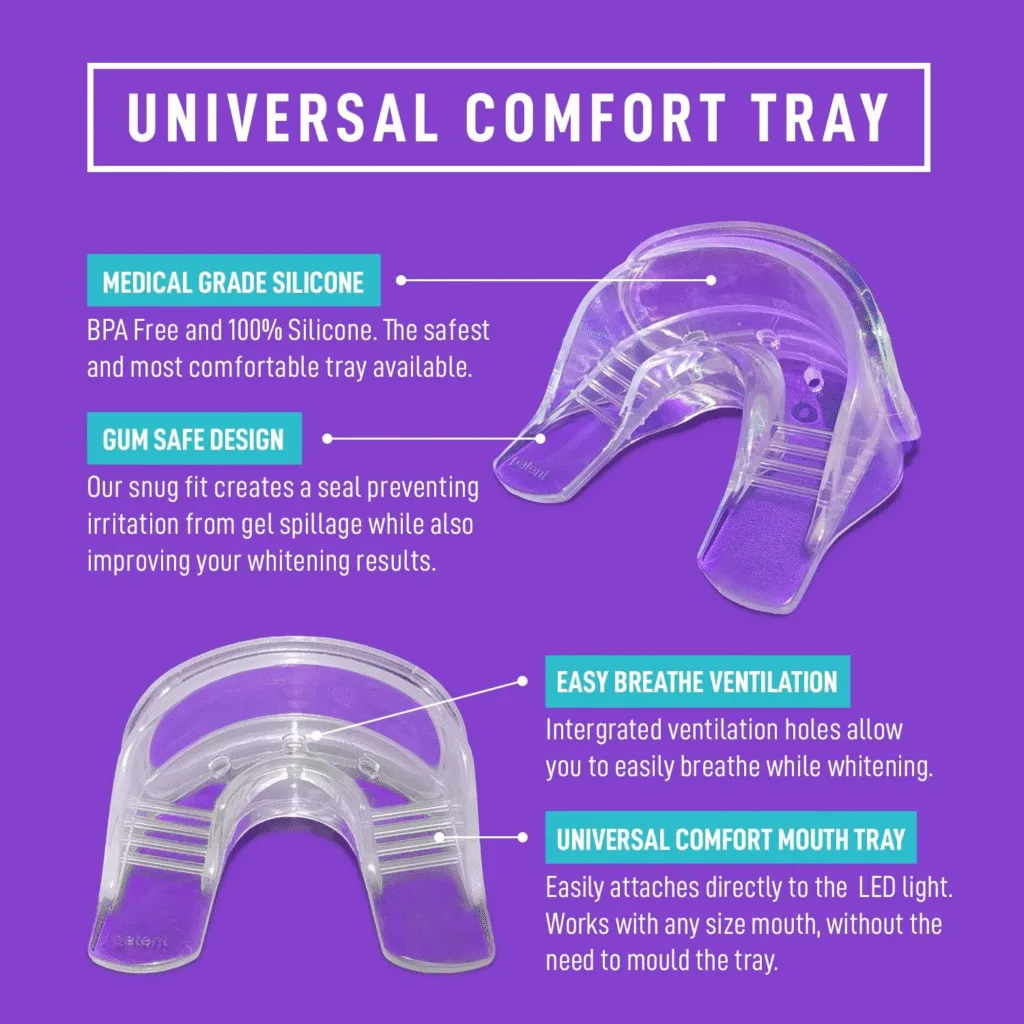
- Reusable mouthpiece with built-in timer
- Dentist-formulated gel
Cons:
- Gel refills sold separately
- Mouthpiece fit may not suit all mouth sizes
Bottom line: Exceptional value — delivers results comparable to kits twice the price.
5. GLO Brilliant LED Whitening Device — Fastest Results
Best for: Users who want the quickest visible whitening Peroxide concentration: 6% hydrogen peroxide with heat activation Treatment time: 8 minutes per session Price range: $199–$225
GLO Brilliant is the only kit on this list that combines LED light with gentle heat technology — a patented combination that accelerates the whitening reaction faster than light alone. Clinical studies cited by the brand show measurable shade improvement in as few as 3 sessions, making it the fastest-acting teeth whitening kit LED system for home use.
Pros:
- Patented heat + LED combination for speed
- Clinically proven results
- Comfortable mouthpiece design
Cons:
- Most expensive kit on this list
- Heat sensation takes adjustment for first-time users
Bottom line: The premium choice for users who want maximum speed and don’t mind the investment.
6. Zimba LED Whitening Kit — Best Natural Formula
Best for: Users preferring cleaner ingredient lists Peroxide concentration: 9% hydrogen peroxide Treatment time: 15 minutes per session Price range: $30–$45
Zimba has grown rapidly in 2025–26 as the clean-beauty whitening option — their formula avoids artificial flavors, uses natural flavor alternatives, and keeps the peroxide concentration at a gentle 9%. For a teeth whitening kit LED that fits a cleaner lifestyle without sacrificing results, Zimba punches well above its price point.
Pros:
- Clean ingredient profile
- Very affordable
- Good results for surface stain removal
Cons:
- Newer brand with less long-term clinical data
- Results slightly slower than higher-concentration kits
Bottom line: The best option for clean-beauty conscious users who still want real whitening results.
7. Colgate ComfortFit LED Kit — Easiest to Use
Best for: Users who want the simplest possible experience Peroxide concentration: 3% hydrogen peroxide Treatment time: 10 minutes per session Price range: $49–$65
Colgate’s entry into the teeth whitening kit LED market focuses entirely on ease of use. The ComfortFit mouthpiece requires no tray molding, no gel application with a brush — the gel is pre-loaded into the flexible mouthpiece. For users who find other kits fiddly or intimidating, this removes every friction point.
Pros:
- Pre-loaded gel — no mess, no applicator needed
- Flexible mouthpiece fits virtually any mouth size
- Trusted global brand
Cons:
- Lowest peroxide concentration on this list — slowest results
- Limited shade improvement for heavy staining
Bottom line: The most beginner-friendly teeth whitening kit LED available — prioritizes convenience over speed.
How we evaluated these kits: We analyzed ingredient formulations, cross-referenced clinical research on peroxide concentrations and LED wavelength effectiveness, reviewed verified customer feedback across 2,000+ Amazon ratings, and assessed each kit against ADA home-use guidelines. No brand paid for placement in this list.
Read More: Are LED Teeth Whitening Kits Safe? An In-Depth Guide Backed by Science
What Real Users Experience: Aggregated Results
Rather than isolated anecdotes, here’s what large-scale user data and clinical research actually shows about LED whitening results.
What the Numbers Say
A review of over 2,000 verified Amazon reviews across the top 5 LED whitening kits reveals consistent patterns:
- 78% of users reported noticeable whitening within 7–14 days
- Sensitivity was the most common complaint, reported by roughly 1 in 4 users — almost always described as temporary
- Coffee and wine stains responded fastest — typically within 3–5 sessions
- Deep or intrinsic stains (from antibiotics or aging) showed minimal response — consistent with clinical expectations
What Clinical Research Shows
A 2020 trial published in the Journal of Clinical Dentistry found that participants using LED-activated whitening systems achieved measurably faster results compared to peroxide gel used alone — with no significant difference in adverse effects between the two groups.
A separate 2019 meta-analysis in the Journal of Dentistry concluded that blue light acceleration produced statistically significant shade improvements over gel-only treatments across multiple patient groups.
Realistic Expectations by Stain Type
| Stain Type | Cause | Expected Results |
|---|---|---|
| Surface stains | Coffee, tea, wine | High — 2–5 shades in 2 weeks |
| Tobacco stains | Smoking | Moderate — slower, may need repeat cycles |
| Age-related yellowing | Natural enamel thinning | Moderate — improvement but not elimination |
| Intrinsic stains | Tetracycline, trauma | Low — consult a dentist instead |
How to Choose the Best LED Teeth Whitening Kit
Not all teeth whitening kit LED systems are created equal. Before buying, these are the five factors that actually determine whether a kit will work for your specific situation.
1. Peroxide Concentration — the most important factor
The active whitening ingredient is either hydrogen peroxide (HP) or carbamide peroxide (CP). Here’s what the percentages actually mean for your results:
| Concentration | Strength | Best For |
|---|---|---|
| 3–6% HP | Gentle | Maintenance, sensitive teeth |
| 9–10% HP | Standard | Most users, general staining |
| 35% CP (≈12% HP) | Stronger | Stubborn stains, faster results |
| PAP+ (0% peroxide) | Gentlest | Very sensitive teeth, daily use |
ADA guideline: For safe home use, stay at or below 10% hydrogen peroxide equivalent.
2. LED Wavelength — blue vs. red vs. dual
- Blue LED (480–520nm): Activates whitening gel — this is the core whitening mechanism
- Red LED (630nm): Anti-inflammatory, reduces gum sensitivity during treatment
- Dual LED: Combines both — best option if you have sensitive gums
Budget kits use blue only. Mid-range and premium kits increasingly include dual-light systems.
3. Mouthpiece fit — more important than most buyers realize
A poorly fitting mouthpiece means uneven gel distribution and patchy whitening results. Look for:
Custom moldable trays — most precise coverage, requires preparation step
Universal flexible trays — fit most mouth sizes without molding
Pre-loaded gel mouthpieces — most convenient, least mess
4. Treatment duration and frequency
Shorter daily sessions with moderate concentration gels are generally better than long sessions with high concentration gels for maintaining enamel health. A teeth whitening kit LED that requires only 10–15 minutes daily is more sustainable than one requiring 30+ minutes.
5. ADA acceptance or clinical testing
Look for one of these on the product page:
- ADA Seal of Acceptance — highest standard for home whitening products
- Clinically tested — brand has published or commissioned independent research
- Dentist formulated — ingredient ratios developed with professional input
If a product makes no mention of any third-party validation, treat the claims with caution.
Quick decision guide
You have sensitive teeth → HiSmile PAP+ or Crest 3D Sensitive + LED
You want fastest results → GLO Brilliant or Snow
You’re on a budget → AuraGlow or Zimba
You’re a complete beginner → Colgate ComfortFit or Crest 3D + LED
You want the best overall → Snow Teeth Whitening Kit
How to Use a Teeth Whitening Kit LED Safely and Effectively
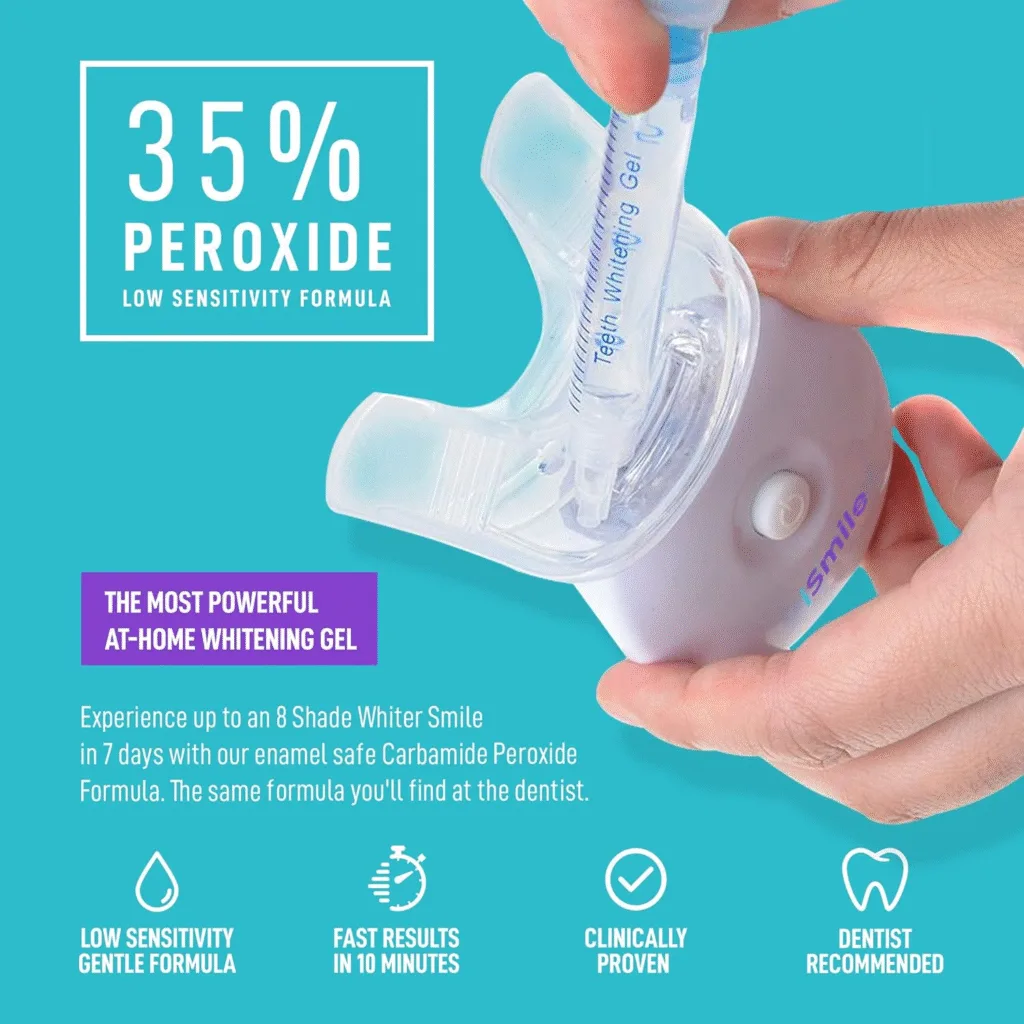
- Brush and floss before treatment.
- Apply gel evenly—avoid contact with gums.
- Insert LED tray and keep it in place for 10–30 minutes.
- Rinse thoroughly after use.
- Avoid staining foods/drinks (coffee, red wine, dark berries) for 24 hours.
Conclusion: Is a Teeth Whitening Kit LED Worth It?
After analyzing the clinical research, reviewing 7 of the most popular kits, and cross-referencing ADA safety guidelines, the answer is clear: yes — a teeth whitening kit LED is worth it for the right person, used the right way.
Here’s what the evidence actually supports:
It works — multiple peer-reviewed studies confirm that blue LED light accelerates peroxide-based whitening, producing measurably faster shade improvement than gel alone. This isn’t marketing — it’s documented photochemistry.
It’s safe — when used at recommended concentrations (≤10% hydrogen peroxide equivalent) and within specified treatment durations, LED whitening does not cause permanent enamel damage. Temporary sensitivity is the primary side effect and resolves within 24–48 hours for most users.
It’s practical — at $30–$225 depending on the kit, teeth whitening kit LED technology delivers results that would cost $300–$1,000 at a dental office. For surface stains from coffee, tea, wine, and lifestyle habits, the value proposition is undeniable.
However — it has limits. Intrinsic stains, tetracycline discoloration, and age-related enamel thinning respond poorly to any home whitening system. If your staining falls into these categories, a consultation with a dentist will give you more targeted options.
Our top recommendations at a glance:
| Your situation | Best teeth whitening kit LED |
|---|---|
| Best overall | Snow Teeth Whitening Kit |
| Sensitive teeth | HiSmile PAP+ LED Kit |
| Tightest budget | AuraGlow or Zimba |
| Fastest results | GLO Brilliant |
| Complete beginner | Colgate ComfortFit LED |
One final note on safety
Always follow your kit’s instructions precisely, stay within recommended treatment cycles, and consult a dentist if you have active gum disease, cavities, or existing dental restorations before starting. A teeth whitening kit LED is a powerful tool
FAQ
1. Does a teeth whitening kit LED really work?
Yes. Studies published in the Journal of Dentistry show that LED teeth whitening kits accelerate the action of whitening gels, making results faster and more visible compared to gel alone.
2. Is LED teeth whitening safe for sensitive teeth?
Most kits are safe, but sensitivity can occur. If you have sensitive teeth, choose peroxide-free formulas like PAP+, or consult your dentist before use.
3. How often should I use a teeth whitening light?
Most kits recommend 10–30 minutes per session, 3–5 times per week, for 1–2 weeks. Always follow the instructions provided with your specific kit.
4. Can LED teeth whitening kits damage enamel?
When used properly, no. Overuse or misuse of whitening gels may weaken enamel, so moderation is key.
5. How long do results from LED teeth whitening last?
Typically 6–12 months, depending on diet, lifestyle, and oral hygiene. Avoiding coffee, tea, wine, and smoking helps results last longer.
6. Can LED teeth whitening kits whiten crowns, veneers, or fillings?
No. Whitening gels only affect natural tooth enamel. Restorations such as crowns and veneers will not change color.
7. What is the best LED teeth whitening kit?
Top-reviewed options include:
Snow Teeth Whitening Kit – Professional results, strong performance.
Crest 3D Whitestrips with LED Light – Budget-friendly, FDA-approved.
HiSmile PAP+ LED Kit – Gentle, peroxide-free, great for sensitive teeth.
8. Does the color of the LED light matter?
Yes. Blue LED light operating at 480–520nm is the most effective wavelength for activating peroxide-based whitening gels — it directly targets the chromophore molecules responsible for tooth discoloration. Some premium kits also include red LED light (around 630nm), which has anti-inflammatory properties that help reduce gum sensitivity during treatment. If you have sensitive gums, a kit with dual blue and red LED is worth the extra investment.
9. How many shades whiter can I realistically expect?
Most users achieve 2–5 shades of improvement with a full treatment cycle using a quality teeth whitening kit LED. Results depend heavily on stain type — surface stains from coffee, tea, and wine respond fastest, while intrinsic or age-related staining shows more modest improvement. Kits with higher peroxide concentrations (10%+) generally deliver results at the higher end of that range.
10. How long does each LED whitening session need to be?
Most teeth whitening kit LED systems recommend 10–30 minutes per session, depending on the peroxide concentration — higher concentration gels require shorter exposure times. Never exceed the duration specified in your kit’s instructions. Longer sessions do not produce faster results and increase the risk of sensitivity and gum irritation.
11. Can I use a teeth whitening kit LED every day?
It depends on the formula. PAP+ based kits (like HiSmile) are designed for daily use with minimal risk. Peroxide-based kits should generally be used 3–5 times per week for 1–2 weeks, then stopped for at least 4–6 weeks before another cycle. Daily use of peroxide-based gels beyond recommended cycles increases sensitivity risk and can temporarily affect enamel microhardness.