25 Healthy Salad Recipes That Actually Keep You Full (And Taste Amazing)
Most women don’t fail at eating healthy because they lack willpower — they fail because their salads are boring. A bowl of sad iceberg lettuce with watery dressing isn’t a meal; it’s a punishment. The truth? A well-built salad can be your most satisfying, nutrient-dense meal of the day. Studies show that women who eat at least one large salad daily consume 20% more fiber and significantly higher levels of vitamins A, C, and K than those who don’t. In this guide, you’ll discover 25 genuinely delicious healthy salad recipes — from protein-packed power bowls to crisp cucumber salads — along with the building blocks, tips, and science that make every bite worth it.
Why Healthy Salads Are More Than a Side Dish
For years, salads were treated as the appetizer — the thing you ate before the “real” meal arrived. That mindset is officially outdated.
Modern nutrition science has completely reframed what a salad can be. When built correctly, a salad is a complete, macro-balanced meal that supports gut health, sustained energy, hormone balance, and even skin quality.
According to a 2023 Harvard T.H. Chan School of Public Health report, women between 25 and 34 are among the most diet-conscious demographic in the United States — yet also the most likely to skip meals due to time constraints. Salads solve this problem elegantly: they’re fast to assemble, endlessly customizable, and nutrient-dense by design.
Here’s what a properly built salad does for your body:
- Supports hormonal balance through healthy fats (avocado, olive oil, nuts)
- Improves gut microbiome diversity via high-fiber vegetables and fermented toppings
- Stabilizes blood sugar when protein and fat are included alongside greens
- Reduces inflammation with antioxidant-rich ingredients like leafy greens, berries, and seeds
Real-world example: Swapping a midday sandwich for a quinoa and roasted vegetable salad three times a week can reduce your weekly refined carb intake by up to 40% — without feeling deprived.
The goal isn’t restriction. It’s replacement with something better.
The Anatomy of a Perfect Healthy Salad
Before you dive into recipes, understanding the formula behind great salads saves you from ever eating a bland one again.
Every satisfying salad has five components:
1. The Base (Greens or Grains)
Your foundation sets the tone for everything else.
- Leafy greens: Arugula, baby spinach, romaine, kale, mixed spring greens
- Grain bases: Quinoa, farro, bulgur, brown rice, lentils
- Hybrid: Half greens, half grains — maximum nutrition and texture
Pro tip: Massaging kale with a small amount of olive oil and lemon juice for 60 seconds breaks down its tough cell walls, making it softer, less bitter, and easier to digest.
2. The Protein (Keeps You Full)
Without protein, a salad is a snack — not a meal.
- Grilled chicken breast, poached salmon, seared tuna
- Hard-boiled eggs, marinated tofu, tempeh crumbles
- Chickpeas, white beans, edamame, lentils
- Cheese: feta, goat cheese, shaved parmesan
Target 20–30g of protein per salad to ensure satiety through your afternoon.
3. The Color (Vegetables & Fruit)
This is where your micronutrients live. Aim for at least three colors per bowl.
- Red: Cherry tomatoes, roasted red peppers, pomegranate seeds
- Orange/Yellow: Shredded carrots, roasted sweet potato, mango
- Purple: Red cabbage, blueberries, pickled onion
- Green: Cucumber, avocado, snap peas, edamame
4. The Crunch (Texture Matters)
Texture is the difference between a salad that satisfies and one you suffer through.
- Toasted nuts and seeds: walnuts, pumpkin seeds, sunflower seeds
- Whole grain croutons or toasted chickpeas
- Thinly sliced radishes or jicama
- Crumbled crackers or seed crackers
5. The Dressing (Flavor and Fat)
Healthy fats in your dressing are not optional — they’re required. Fat-soluble vitamins (A, D, E, K) in your greens cannot be absorbed without dietary fat present.
Use 1–2 tablespoons of a quality dressing. Homemade always wins over bottled.
25 Healthy Salad Recipes to Try This Week
Protein-Packed Salads
These are your weekday workhorses — filling, fast, and genuinely satisfying.
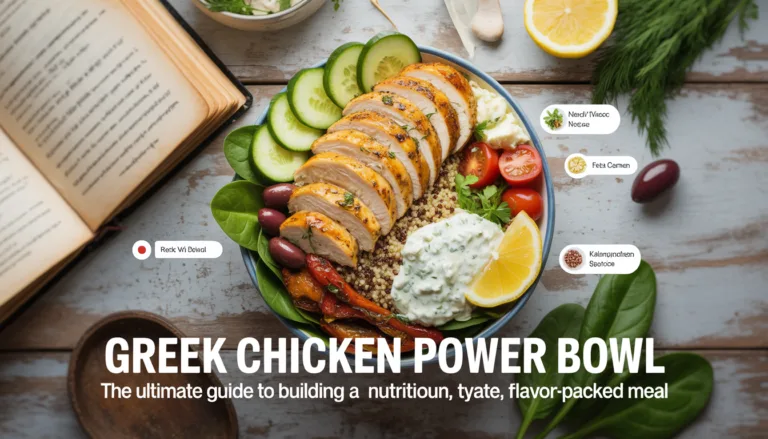
1. Greek Chicken Power Bowl
The Mediterranean diet is consistently ranked the world’s healthiest eating pattern. This salad brings it together in one bowl.
Ingredients: Grilled chicken breast, romaine, cherry tomatoes, Kalamata olives, cucumber, red onion, feta cheese, lemon-oregano vinaigrette.
Why it works: High protein from chicken, healthy fats from olives and feta, and anti-inflammatory compounds from oregano and lemon.
Prep tip: Marinate chicken in lemon juice, garlic, and dried oregano overnight for maximum flavor.
2. Salmon Nicoise Salad
A French classic with serious nutritional credentials.
Ingredients: Seared or canned salmon, steamed green beans, halved baby potatoes, cherry tomatoes, hard-boiled eggs, capers, Dijon vinaigrette.
Nutrition highlight: Wild salmon delivers 2,000mg+ of omega-3 fatty acids per serving — critical for skin health, brain function, and hormone regulation.
3. Spicy Thai Peanut Chicken Salad
This one converts salad skeptics. Fast, bold, and filling.
Ingredients: Shredded rotisserie chicken, shredded purple cabbage, julienned carrots, edamame, chopped cilantro, crushed peanuts, spicy peanut-lime dressing.
Real-world shortcut: Use rotisserie chicken and pre-shredded coleslaw mix. Total assembly: under 10 minutes.
4. Steak & Arugula Salad
Peppery arugula and seared flank steak is a combination that never fails.
Ingredients: Thinly sliced flank steak (medium-rare), baby arugula, shaved parmesan, toasted pine nuts, cherry tomatoes, lemon-olive oil dressing.
Pro tip: Let steak rest 5 minutes before slicing — this keeps it juicy and prevents the greens from wilting.
5. Tuna & White Bean Salad
Italian pantry magic. Ready in 5 minutes, packed with protein and fiber.
Ingredients: Good-quality tuna (packed in olive oil), cannellini beans, thinly sliced celery, red onion, flat-leaf parsley, lemon juice, extra virgin olive oil.
Stat: One serving delivers approximately 35g of protein — nearly 70% of many women’s daily protein target.
Vegetarian Recipes & Plant-Based Bowls
A 2022 survey by the Plant Based Foods Association found that 79% of US consumers now eat plant-based meals at least once per week. These vegetarian recipes make it effortless.
6. Roasted Beet & Goat Cheese Salad
Elegant, earthy, and surprisingly sweet.
Ingredients: Roasted golden and red beets, mixed greens, crumbled goat cheese, candied walnuts, thinly sliced shallots, orange-walnut vinaigrette.
Health note: Beets are rich in nitrates, which research links to improved cardiovascular function and exercise performance.
7. Quinoa & Roasted Vegetable Bowl
Your meal-prep hero. Makes four servings that taste better the next day.
Ingredients: Cooked quinoa, roasted zucchini, bell pepper, and red onion, baby spinach, chickpeas, tahini-lemon dressing, fresh herbs.
Why quinoa? It’s one of the only plant proteins containing all nine essential amino acids — making it a complete protein source for vegetarian recipes.
8. Caprese Salad with a Twist
The classic, elevated.
Ingredients: Heirloom tomatoes, fresh burrata, basil, strawberries, aged balsamic glaze, flaky sea salt, good olive oil.
The twist: Adding strawberries introduces vitamin C, which significantly boosts iron absorption from the basil.
9. Lentil & Roasted Carrot Salad
Warm, hearty, and deeply satisfying even in cooler months.
Ingredients: French green lentils, roasted carrots with cumin, arugula, crumbled feta, toasted pepitas, apple cider vinaigrette.
10. Mango & Avocado Salad
Light, tropical, and stunning on the plate.
Ingredients: Diced ripe mango, sliced avocado, red bell pepper, thinly sliced red onion, cilantro, jalapeño, lime juice, pinch of sea salt.
Best use: Serve alongside grilled fish or as a standalone healthy snack salad on a warm afternoon.
11. Watermelon & Feta Summer Salad
A crowd-pleaser that tastes like summer in every bite.
Ingredients: Cubed seedless watermelon, crumbled feta, fresh mint, thinly sliced cucumber, red onion, lime juice, olive oil.
12. Buddha Bowl with Tahini Dressing
The architecture of the ultimate plant-based bowl.
Ingredients: Brown rice or quinoa base, roasted sweet potato, avocado, shredded purple cabbage, steamed edamame, sliced cucumber, tahini-garlic dressing.
Assembly tip: “Macro bowl” your ingredients — lay them in separate sections rather than tossing everything together. Better presentation, easier portioning.
Crisp Cucumber Salad Variations
Cucumber salad is having a moment — and for good reason. Low calorie, hydrating, endlessly versatile, and genuinely refreshing.
Cucumbers are 95% water by weight, making cucumber salad one of the best options for hydration and skin health.
13. Classic Asian Cucumber Salad
The one you’ll make every week once you try it.
Ingredients: English cucumber (thinly sliced), rice wine vinegar, sesame oil, soy sauce (or tamari), toasted sesame seeds, thinly sliced scallions, optional chili flakes.
Prep technique: Salt cucumber slices and let them sit 15 minutes, then squeeze out excess water. This concentrates flavor and prevents a watery dressing.
14. Greek Cucumber & Tomato Salad
Simple. Bright. Endlessly refreshing.
Ingredients: Sliced cucumber, halved cherry tomatoes, Kalamata olives, thinly sliced red onion, dried oregano, red wine vinegar, olive oil, optional feta.
15. Tzatziki Cucumber Salad
Greek yogurt dressing does double duty — dressing and protein source.
Ingredients: Diced cucumber, full-fat Greek yogurt, fresh dill, garlic, lemon zest, olive oil, white wine vinegar, sea salt.
Stat: Full-fat Greek yogurt contains up to 17g of protein per cup — more than most protein bars.
16. Spicy Korean Cucumber Salad (Oi Muchim)
Bold, punchy, and ready in 5 minutes.
Ingredients: Persian cucumbers (sliced or halved), gochugaru (Korean red pepper flakes), sesame oil, rice vinegar, garlic, sugar, toasted sesame seeds, scallions.
Serving suggestion: Pairs beautifully with rice bowls, grilled proteins, or on its own as a healthy munchie between meals.
17. Cucumber & Dill Ribbon Salad
Elegant enough for a dinner party.
Technique: Use a vegetable peeler to create long, thin cucumber ribbons. Toss with fresh dill, thinly sliced shallots, crème fraîche, white wine vinegar, lemon zest.
Healthy Munchies: Light & Snackable Salads
Not every salad is a main event. These lighter options are perfect as healthy munchies — satisfying between-meal bites that don’t derail your energy or nutrition goals.
18. Edamame & Corn Salad
Five ingredients. Maximum freshness.
Ingredients: Shelled edamame, fresh or roasted corn, diced red bell pepper, lime juice, sea salt, smoked paprika.
Prep: Boil edamame 3 minutes, drain, toss everything together. Keeps beautifully in the fridge for 3 days.
19. Chickpea & Herb Salad
Packed with plant protein and fiber for a snack that actually satisfies.
Ingredients: Rinsed chickpeas, diced cucumber, cherry tomatoes, flat-leaf parsley, mint, lemon juice, olive oil, za’atar.
20. Shaved Fennel & Orange Salad
A palate cleanser that works as a light snack or elegant starter.
Ingredients: Thinly shaved fennel, segmented naval orange, baby arugula, toasted almonds, lemon-honey dressing.
Why it works: Fennel aids digestion — an ideal after-lunch snack for beating the afternoon slump.
Grain & Legume Salads
Grain and legume salads have one superpower that leafy green salads lack: they hold up in the fridge for days without wilting. This makes them the undisputed champions of meal prep.
Research published in the Journal of Nutrition found that eating legumes at least twice per week significantly improves satiety scores and reduces between-meal snacking.
21. Farro & Roasted Mushroom Salad
Deep, umami-rich, and substantial enough for dinner.
Ingredients: Cooked farro, roasted cremini and shiitake mushrooms, baby spinach, shaved parmesan, toasted pine nuts, balsamic-thyme vinaigrette.
Why farro? Higher in protein and fiber than most grains, with a satisfying chew that holds dressing well without getting soggy.
22. Black Bean & Corn Taco Salad
All the joy of taco night, none of the guilt.
Ingredients: Romaine lettuce, black beans, roasted corn, diced avocado, cherry tomatoes, shredded purple cabbage, cilantro, crushed tortilla chips, chipotle-lime dressing.
Serving tip: Serve the dressing and chips separately until the moment of eating — keeps the salad crisp for meal prep purposes.
23. Mediterranean Chickpea & Feta Salad
A pantry staple salad that goes from shelf to bowl in 8 minutes.
Ingredients: Chickpeas, diced cucumber, cherry tomatoes, sun-dried tomatoes, Kalamata olives, crumbled feta, red onion, fresh parsley, lemon-oregano dressing.
Seasonal & Roasted Vegetable Salads
Roasting transforms ordinary vegetables into deeply caramelized, flavor-concentrated powerhouses. These salads work warm, room temperature, or cold from the fridge.
24. Roasted Butternut Squash & Cranberry Salad
A fall and winter staple that’s visually stunning and deeply nourishing.
Ingredients: Roasted butternut squash cubes, mixed greens, dried cranberries, toasted pecans, pumpkin seeds, crumbled goat cheese, maple-dijon dressing.
Technique note: Roast squash at 425°F (220°C) for 25 minutes until caramelized. The higher temp is the secret to developing sweetness.
25. Roasted Cauliflower & Pomegranate Salad
Show-stopping presentation with nutritional credentials to match.
Ingredients: Roasted cauliflower florets with turmeric and cumin, arugula, pomegranate arils, toasted almonds, fresh mint, tahini-lemon dressing.
Nutrition spotlight: Turmeric contains curcumin, one of the most studied anti-inflammatory compounds in nutritional science. Adding black pepper increases curcumin absorption by up to 2,000%.
Dressings That Elevate Every Salad
The right dressing is the difference between a forgettable salad and one you crave the next day. All of these take under 3 minutes to make.
Classic Lemon Vinaigrette
The universal base dressing. Works on everything.
- 3 tablespoons extra virgin olive oil
- 1.5 tablespoons fresh lemon juice
- 1 teaspoon Dijon mustard
- 1 small garlic clove (minced or grated)
- Salt and pepper to taste
Whisk together or shake in a jar. Keeps refrigerated for one week.
Tahini-Lemon Dressing
Rich, creamy, plant-based, and packed with calcium.
- 3 tablespoons tahini
- 2 tablespoons lemon juice
- 1 tablespoon water (add more for desired consistency)
- 1 small garlic clove
- Pinch of cumin and sea salt
Creamy Avocado Herb Dressing
Dairy-free and deeply satisfying.
Blend: 1 ripe avocado, juice of 1 lime, ¼ cup water, handful of cilantro or basil, 1 garlic clove, salt to taste.
Spicy Peanut-Lime Dressing
The one that makes everyone ask for the recipe.
- 2 tablespoons natural peanut butter
- 2 tablespoons lime juice
- 1 tablespoon soy sauce or tamari
- 1 teaspoon sesame oil
- 1 teaspoon honey or maple syrup
- ½ teaspoon grated ginger
- Optional: 1 teaspoon sriracha
Golden rule: Homemade dressings always outperform bottled — in flavor, nutrition, and cost. A batch takes 3 minutes and lasts a week.
Meal Prep Strategies for Healthy Salads
One of the biggest reasons people abandon healthy salads? They make them on impulse, get busy, and default to something easier. Meal prepping your salad components removes friction entirely.
Here’s a proven system used by registered dietitians and productivity-focused home cooks alike:
The Sunday Prep Method
Dedicate 45–60 minutes on Sunday afternoon:
- Wash and dry all greens. Spin them dry thoroughly — moisture is the enemy of longevity. Store in a container lined with a paper towel.
- Cook your grains. Make a large batch of quinoa, farro, or brown rice. Stores refrigerated for 5 days.
- Roast your vegetables. One sheet pan of whatever’s in season. Roasted veg adds flavor and warmth to any salad.
- Prep your protein. Grill chicken breasts, hard-boil eggs, or portion out canned legumes.
- Make your dressings. Two or three options gives variety through the week.
- Chop stable vegetables. Bell peppers, cucumber, red onion, celery — store in separate containers.
Assembly Strategy
Keep toppings, dressings, and any crunchy elements separate until you’re ready to eat. A prepped salad base holds for 3–4 days. Dressed salad? Eat within 2 hours.
Best Containers for Salad Prep
- Glass containers with lids for grain and legume salads (no plastic taste, microwave-safe)
- Wide-mouth mason jars for layered salads (dressing on the bottom, greens on top — flip and shake when ready)
- Small condiment containers for dressings and toppings — keeps everything crisp
Real-world example: Prepping five salad bowls on Sunday takes approximately 50 minutes total. That’s 10 minutes per meal — versus 20–30 minutes deciding and assembling each day. Over a week, that reclaims nearly 90 minutes.
Common Salad Mistakes — And How to Fix Them
Even experienced home cooks make these errors. Fixing them immediately upgrades every salad you make.
Mistake 1: Wet Greens
Problem: Greens that aren’t properly dried dilute your dressing and make everything soggy within minutes.
Fix: Use a salad spinner every time. Then pat with a clean kitchen towel. Dry greens hold dressing like velvet — wet ones repel it.
Mistake 2: Overdressing
Problem: Too much dressing overwhelms every other flavor and adds unnecessary calories.
Fix: Start with one tablespoon, toss thoroughly, taste, and add more if needed. You almost never need as much as you think.
Mistake 3: No Protein
Problem: A salad without adequate protein leads to hunger within 90 minutes — which is why so many people claim “salads don’t keep me full.”
Fix: Always include at least one protein source, targeting 20–30g per bowl. This single change transforms salads from a side to a complete meal.
Mistake 4: Monotone Texture
Problem: Everything in the bowl is the same softness — no contrast, no interest.
Fix: Layer textures deliberately. Soft (avocado) + chewy (farro) + crunchy (toasted seeds) = a salad that satisfies on every bite.
Mistake 5: Forgetting Acid
Problem: A salad that tastes flat almost always needs more acid, not more salt.
Fix: Add a squeeze of fresh lemon or lime, or a splash of good vinegar at the end of assembly. Acid brightens all other flavors instantly.
Mistake 6: Eating the Same Salad Every Day
Problem: Nutrition research consistently shows that dietary variety is critical for microbiome diversity. Eating the same healthy salads on rotation limits your exposure to different phytonutrients.
Fix: Rotate your greens, proteins, and toppings weekly. Use seasonal produce as your guide — it naturally forces variety throughout the year.
Conclusion
Building a life around healthy salad recipes isn’t about deprivation — it’s about discovering how genuinely satisfying, colorful, and flavorful real food can be. The three most important things to take away from this guide: always include protein so your salad keeps you full, build in texture variety so every bite is interesting, and prep your components in advance so healthy eating becomes effortless rather than effortful.
Whether you’re mastering a simple cucumber salad on a busy Tuesday or assembling a roasted vegetable grain bowl for Sunday meal prep, the recipes and techniques in this guide give you everything you need to make healthy salads the cornerstone of your week.
Start with one recipe today. Pick the one that sounds most appealing, gather the ingredients, and prove to yourself that healthy salads are a pleasure — not a compromise. Once you find your favorites, healthy eating stops feeling like discipline and starts feeling like exactly what your body asked for all along.
FAQ
How many calories are in a typical healthy salad?
A well-built meal salad typically ranges from 400 to 700 calories, depending on protein, dressing, and toppings. This is a healthy, satisfying range for a main meal. Adding calorie-dense items like avocado, nuts, or cheese pushes the number up — but also increases satiety and nutritional value significantly.
Can I eat healthy salads every day and still lose weight?
Yes — when salads include adequate protein and healthy fats, they support weight management effectively. The key is avoiding calorie-dense bottled dressings and excess cheese. A balanced salad daily, combined with mindful portion sizes elsewhere, is a sustainable, evidence-backed approach to weight loss.
How do I keep my cucumber salad from getting watery?
Salt your cucumber slices first. Toss with ½ teaspoon salt and let sit 15 minutes, then squeeze out or drain the excess liquid. This removes excess water before it can dilute your dressing. Always store cucumber salad dressing separately if prepping ahead.
What are the best greens for weight loss in healthy salads?
Arugula, baby spinach, watercress, and romaine are top picks. Arugula is calorie-light and high in glucosinolates. Spinach provides iron and folate. Watercress is one of the most nutrient-dense foods per calorie on earth. Kale is excellent but works best massaged with olive oil to improve texture and digestibility.
Are vegetarian salad recipes nutritionally complete?
They absolutely can be — with intentional planning. Combine a complete protein source (quinoa, edamame, or legumes paired with grains), healthy fats (avocado, olive oil, nuts), and a wide variety of colorful vegetables. The more diverse your plant ingredients, the more complete your micronutrient profile becomes. Add nutritional yeast for B12 if fully plant-based.